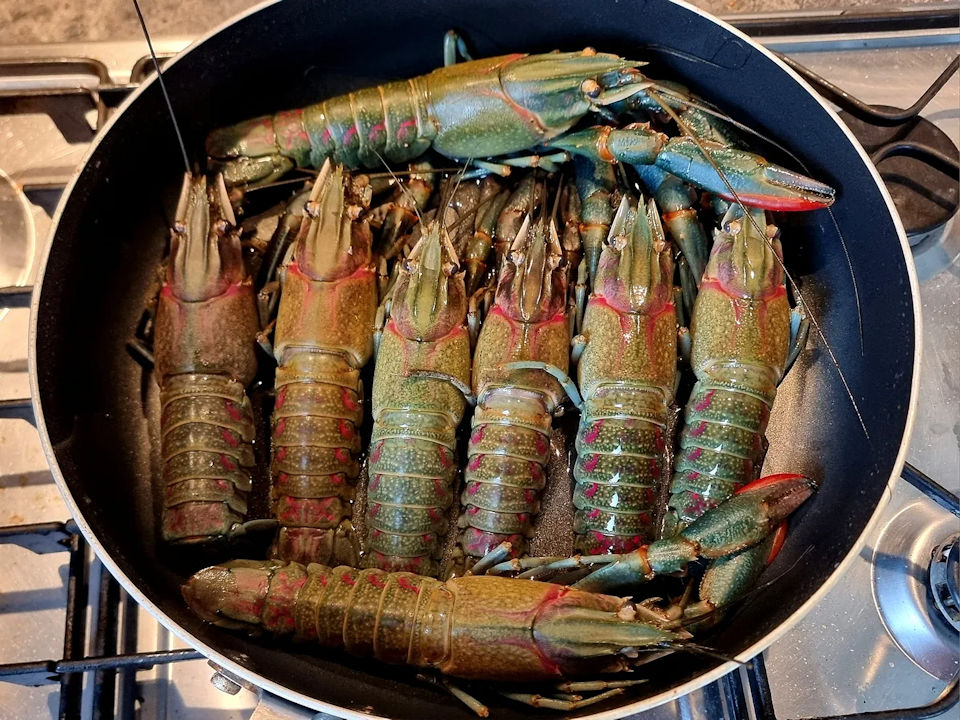
Yabbies (Cherax Destructor) are native to Australia and related to crayfish, crabs, lobsters, prawns and shrimp. They live in creeks, dams, rivers, backwaters and lakes to the west of the Great Dividing Range. I use the term “Yabby” to refer to a variety of species – sort of like an affectionate nickname.
The name is derived from the word yabba which is what they were called by the Aboriginal people who lived along the Murrumbidgee River. The second longest river in Australia, it is a major tributary of the Murray River. In other areas they were known as “yabber” or “yabij”.
Spring and summer are the best times to catch yabbies, but it is possible to catch them in winter too. One of the greatest traits of yabbies is their ability to survive through super dry conditions, including prolonged droughts. When their waterway dries up they will often burrow into the mud, digging down deeper and deeper as the drought drags on. Once the rain returns and the waterway fills back up, the yabbies will come back out of their holes and move freely around the water again. The water you catch the yabbies in is the best water to store them in.
Yabbies are an important dietary item for Platypus, water birds and Australian native freshwater fish such as Murray Cod and Golden Perch.
There is a yabby farm on Kangaroo Island off the coast of South Australia where they produce Australian Marron (Cherax Cainii), the third largest fresh water crayfish in the world.
But by far the most extensive system I have seen is the Australian Sweetwater Crays farm in Queensland’s Scenic Rim. The yabbies they farm are Red claw (Cherax quadricarinatus) a freshwater crayfish native to Northern Australia and found in most waterways throughout Queensland. Construction of the first ponds began during Co-Vid – a positive outcome during lock down.
 Bush Food Australia
Leave a comment