
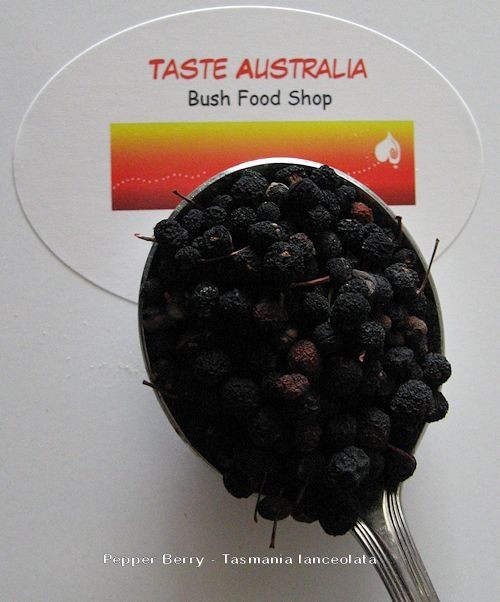
Pepperberry, is the berry from the Mountain Pepper bush. The berry contains antioxidants, anti-inflammatory compounds and antimicrobial properties, all of which may be beneficial for skin health, digestive issues and potentially even blood sugar stabilisation.
There are three native pepper berries –
Mountain Pepper (Tasmannia lanceolata)
Tasmannia lanceolata (syn. Drimys lanceolata), commonly known as the Mountain Pepper (Aus), or Cornish Pepper Leaf (U.K.), is a shrub native to woodlands and cool temperate rainforest of south-eastern Australia
Dorrigo Pepper (Tasmannia stipitata)
Tasmannia stipitata, Dorrigo Pepper or Northern Pepperbush is a rainforest shrub of temperate forests of the Northern Tablelands of New South Wales, Australia.
Alpine Pepper (Tasmannia xerophila) native to the mountains of Tasmania. The fiery leaves get draped in snow in the winter and blasted by Antarctic winds which sweep the icy valleys where this tough plant grows. Alpine pepper can also be used in far more ways than just as a seasoning over cooked dishes.
The plant produces leaf and berry.
Pepperberries are more versatile than conventional peppercorn, able to be used in sweet and savoury dishes. The leaves, stems and berries have an aromatic peppery taste producing approx. 3 times the anti-oxidants of blueberries. Native birds, such as the Black Currawong, eat the berries.
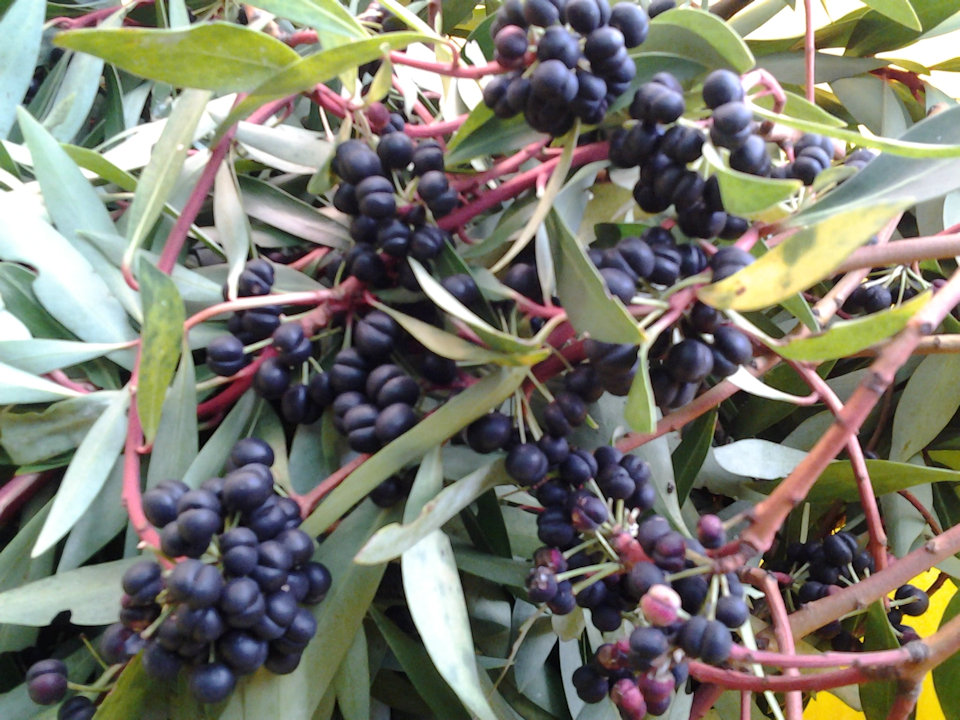
Flowering occurs in mid-Spring October-November. The ripened fruit (March-June) is a pea-sized 2-lobed lustrous deep-purple, almost black, berry with many small angular seeds.
Pepper plants feature heavily in indigenous traditional uses, both in cooking and medicinally.
Although Native Pepperberry can be used in the same way as conventional pepper, it has an added herbal dimension, particularly towards the end of the palate. The dark Pepperberries also infuse a rich plum colour to sauces.
Pepperberries will bleed a soft pink colour into marinades or pickle solutions, pale sauces and yoghurt.
Use it for preparing savouries and soups, vinaigrettes, ice cream jellies, candy, pasta and game.,
Here’s a more detailed look at the medicinal properties of pepperberry:
Antioxidant Properties:
- Pepperberry is rich in antioxidants, including polyphenols, which can help protect cells from damage caused by free radicals.
- These antioxidants may help prevent or delay the onset of chronic diseases like cancer, diabetes, and Alzheimer’s.
- Anthocyanins, a type of polyphenol found in pepperberry, are also potent antioxidants that can protect against oxidative damage.
Anti-inflammatory Properties:
- Pepperberry contains compounds like polygodial, which have demonstrated anti-inflammatory effects.
- This makes it potentially useful for managing inflammatory conditions like arthritis and asthma.
- The anti-inflammatory properties may also help soothe skin irritation and reduce redness.
Antimicrobial Properties:
- Pepperberry extracts have shown antimicrobial activity, suggesting they may be effective against certain types of infections.
- Some research indicates it may be effective against antibiotic-resistant bacteria.
- This antimicrobial action may also help with digestive issues and support the immune system.
Other Potential Benefits:
- Skin Health: Pepperberry may help soothe and protect sensitive skin due to its antioxidant and anti-inflammatory properties.
- Digestive Health: It may aid digestion by stimulating digestive juices and reducing bloating and stomach discomfort.
- Blood Sugar Regulation: Pepperberry may help slow down glucose absorption from the stomach, potentially aiding in blood sugar stabilization.
- Traditional Uses: Aboriginal people have traditionally used pepperberry for treating skin disorders, venereal diseases, colic, and stomach aches.
 Bush Food Australia
Leave a comment